Learning Outcomes
i. Delve into the fascinating realm of alkali metal preparation, exploring the methods employed to extract and refine these highly reactive elements.
ii. Identify the unique challenges associated with extracting alkali metals from their natural sources due to their high reactivity.
iii. Understand the principles underlying the electrolysis of molten alkali metal salts and the role of a protective inert atmosphere.
iv. Explore the thermochemical reduction method, involving the reaction of alkali metal oxides with reducing agents like calcium or aluminum.
v. Recognize the significance of alkali metals in various industrial applications and their growing demand in modern technologies.
Introduction
In the captivating world of chemistry, where elements display diverse personalities and reactivity, alkali metals emerge as a captivating family of highly reactive elements. These lustrous, silvery metals, including lithium, sodium, potassium, rubidium, and cesium, play a crucial role in various industrial processes and emerging technologies. This lesson will embark on a journey into the intricacies of alkali metal preparation, shedding light on the extraction and refinement processes that unlock the potential of these valuable elements.
i. The Challenge of Alkali Metal Extraction: A Tale of Reactivity
Extracting alkali metals from their natural sources poses a significant challenge due to their high reactivity. These metals readily react with water, forming alkaline hydroxides that liberate hydrogen gas. Moreover, they form stable compounds with other elements, making direct isolation from minerals difficult.
ii. Electrolysis of Molten Alkali Metal Salts: A Pathway to Pure Metals
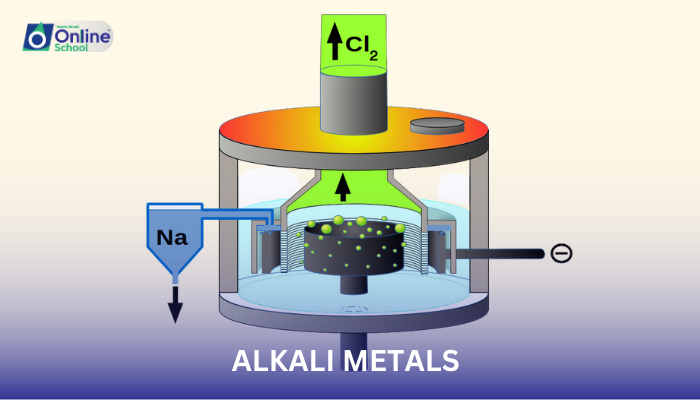
Electrolysis of molten alkali metal salts has emerged as a primary method for producing alkali metals. This method involves passing an electric current through a molten salt solution, causing the alkali metal to deposit on the cathode while the corresponding gas, such as chlorine, is released at the anode.
iii. The Role of Protective Inert Atmospheres: Shielding from Reactivity
Electrolysis of molten alkali metal salts is typically carried out under a protective inert atmosphere, such as argon or helium. This inert environment prevents the highly reactive alkali metal from reacting with air or moisture, ensuring the purity of the extracted metal.
iv. Thermochemical Reduction: An Alternative Approach
Thermochemical reduction offers an alternative method for alkali metal preparation. This method involves heating a mixture of an alkali metal oxide and a reducing agent, such as calcium or aluminum, to a high temperature. The reducing agent reacts with the oxygen in the oxide, releasing the alkali metal as a free element.
v. Significance and Applications: Unveiling the Value of Alkali Metals
Alkali metals play a crucial role in various industries and emerging technologies:
Lithium: Essential for batteries, ceramics, and pharmaceuticals.
Sodium: Used in the production of sodium chloride, sodium hydroxide, and aluminum.
Potassium: Employed in fertilizers, soap manufacturing, and electronic devices.
Rubidium: Utilized in atomic clocks and specialized lighting applications.
Cesium: Employed in medical applications and high-performance vacuum tubes.
Alkali metals, with their unique properties and high reactivity, have transformed various industries and hold immense promise for future technologies. Understanding the methods employed to extract and refine these metals, the challenges associated with their reactivity, and their diverse applications empowers us to appreciate the significance of these elements in shaping our world.
